

Trade shows generate valuable B2B opportunities, but most companies lose momentum in the follow-up stage. A focused handwritten trade show follow-up strategy often converts more leads than email alone because it creates differentiation and reinforces the personal connection established at the booth.
After an event, inboxes fill with similar messages from every vendor in attendance. Even strong prospects may delay responding because each email looks the same. Handwritten outreach changes the experience. It introduces a physical touchpoint that feels deliberate and considered.
If trade shows represent a significant investment, follow-up should be treated as a conversion strategy, not a routine task.
Why Email Alone Falls Short
Post-event emails are predictable and easy to ignore. Most follow a familiar structure and arrive within the same few days. While email is efficient, that efficiency lowers perceived effort.
When every competitor sends nearly identical follow-up, differentiation disappears. Prospects postpone replies or focus only on the most memorable interactions.
Email supports the sales process, but rarely creates distinction by itself.
Why Handwritten Notes Drive Stronger Engagement
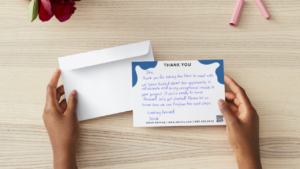
A handwritten note arrives on a desk instead of inside a crowded inbox. It captures attention and signals intent. That signal matters in B2B sales, where perceived effort influences credibility.
Physical mail also extends visibility. Notes are often kept, referenced, or shared internally. An email can be deleted in seconds. A handwritten message remains present, increasing recall during vendor evaluation.
In longer sales cycles, recall influences who receives the next conversation.
Personalization That Feels Authentic
Trade show conversations are brief but meaningful. A follow-up note can reference:
- A challenge the prospect described
- A goal they mentioned
- A feature they asked about
Two or three specific lines demonstrate attention and professionalism. While email can include personalized fields, handwriting feels more individual. That perception often leads to more thoughtful responses.
The objective is not simply to increase reply rates. It is to improve conversation quality.
A Practical Framework for Better Trade Show Follow-Up
An effective handwritten trade show follow-up strategy should include:
- Segmenting leads by opportunity size and buying authority
- Prioritizing high-intent prospects
- Sending notes within two to five days of the event
- Coordinating handwritten mail with email and phone outreach
- Tracking response and meeting rates
When the handwritten note arrives first, later communication feels like a continuation rather than a cold outreach attempt.
Pioneer Direct Marketing helps organizations design personalized direct mail programs that integrate with post-event sales workflows. By aligning segmentation, timing, and messaging, companies can scale handwritten outreach while preserving a human tone.

Converting Trade Show Leads Into Revenue
Trade show ROI is determined after the booth closes. Email alone often blends into background noise. Handwritten follow-up introduces contrast and reinforces credibility.
In competitive industries where pricing and messaging look similar, experience becomes the differentiator. A thoughtful follow-up experience can move a prospect from interest to engagement. For companies seeking stronger trade show lead conversion, the advantage often lies in how they follow up, not how they exhibit.
Ready to improve your trade show follow-up strategy?
Pioneer Direct Marketing creates personalized direct mail programs that help sales teams stand out and convert more leads. Contact us to develop a follow-up system built for performance.