
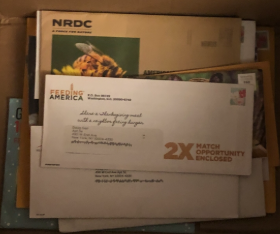
Most nonprofit mail never gets opened. Not because people hate direct mail, but because it all looks the same.
Large envelopes. Generic messaging. Extra inserts that go straight into the trash.
Donors have learned to recognize it before they even open it. That is the real problem.
And it is exactly why direct mail is starting to work again for the organizations willing to rethink it.
The Real Opportunity: Bring Back “Joy” to the Mailbox
There was a time when getting mail felt personal. Today, most of it feels like a transaction.
The nonprofits seeing results are bringing something back that has been missing for years. They are creating mail that feels intentional, human, and worth opening.
That does not mean making it flashy. It means making it feel like it was meant for one person, not thousands.

When that happens, people slow down. They pay attention. They engage.
Why Generic Direct Mail Is Losing
Traditional direct mail still follows a volume mindset. Send as much as possible, include as much as possible, and hope something works.
The problem is that donors can spot mass-produced mail immediately. When everything looks templated, it gets treated like junk.
More volume does not fix this. It makes it worse.
The shift is moving from bulk campaigns to individualized communication.
What Is Replacing It
The most effective nonprofits are not abandoning direct mail. They are changing how it is used.
Instead of sending one message to everyone, they are:
- Segmenting donors based on behavior and history
- Personalizing messaging down to the individual level
- Automating delivery based on real actions
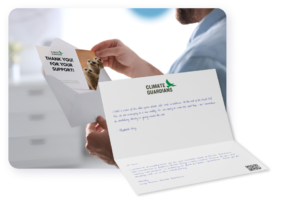
This turns direct mail into something closer to a one-to-one channel. And that is where performance improves.
Handwritten Mail at Scale Changes Everything
One of the most overlooked insights is how powerful handwritten communication still is.
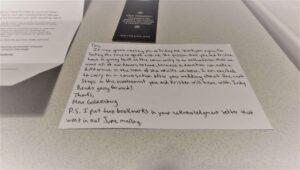
A real pen on paper feels different. People notice it immediately. In the past, this did not scale. It required too much manual effort. Now it does.
With the right systems, nonprofits can send handwritten or handwritten-style mail automatically, without adding workload. That combination of authenticity and scale is what makes it so effective.
Stop Wasting Budget on What Donors Ignore
A lot of nonprofit mail spend goes toward things that do not improve response.
Extra inserts. Return envelopes. Small gimmicks meant to grab attention.
In many cases, these do the opposite. They signal that the piece is generic and mass-produced. Donors are not looking for more materials. They are looking for relevance. Simpler, more personal mail often outperforms complex packages at a lower cost.
The Shift to Behavior-Based Direct Mail
One of the biggest changes is using data to trigger mail, not just schedule it.
Instead of sending campaigns in batches, nonprofits can now:
- Send follow-ups after a donation
- Reach out after a period of inactivity
- Target people who visited their website but did not give
This brings direct mail closer to how digital marketing already works. It also makes every touchpoint more timely and more relevant.
What Will Actually Separate Nonprofits Moving Forward
The gap is not going to be between nonprofits that use direct mail and those that do not. It will be between those that evolve and those that do not. The ones that stand out will:
- Focus on individual experiences, not mass campaigns
- Use automation to scale personalization
- Eliminate waste and unnecessary complexity
- Continuously test and improve performance
Direct mail is not going away. But the way it works is changing fast.
The organizations that adapt will not just get opened. They will be remembered.
If you’re ready to stop blending in and start getting real results from your direct mail, it’s time to rethink your strategy.
👉 Talk to Pioneer Direct Mail and see how personalized mail can become your highest-performing channel.